

Whoa! Hey now, it’s another single, angry, bitter black woman ready to criticize and emasculate our black brothers. Relax, it’s called clickbait for a reason. This isn’t an attack on black men in any way, whatsoever. Rather, it’s an attempted illustration of how toxic masculinity in African households is at the root of a lot of our current issues.
Okay, so what is toxic masculinity?
According to Psychology Today, toxic masculinity is generally defined as the harmful and destructive behaviors associated with certain aspects of traditional masculinity. Which then leads us to the next question of what exactly encompasses traditional masculinity? Well, with gender roles changing every day, this question may be a little hard to answer, but the norms associated with traditional masculinity include strength, risk-taking, and dominance. A recent study also found that these masculine norms can actually be extremely detrimental to a man’s health (awks).
Other characteristics of toxic masculinity include how men should be emotionally stoic, active, aggressive, tough, daring, and dominant and strong. So how does the idea of toxic masculinity relate to our African brothers?
Toxic masculinity in the home
We’re always told that a woman can turn a house into a home, but what’s the man doing? You don’t have to look far to come across an article targeted at mothers telling them how they can have it all, by effectively balancing their home and work life. That said, I’m pretty sure if their husbands put as much effort into maintaining the households as their wives did, then the idea of women having it all wouldn’t be so far-fetched.
I’m not saying that men need to spend more time in the delivery rooms (although those videos of them collapsing on the hospital floor will never get old), but perhaps there should be more to fatherhood than signing cheques for school fees and yelling when your report card comes back with more C’s than A’s?
African households, patriarchy & toxic masculinity
Children emulate their parents and daughters learn from their mothers and sons learn how to treat women from their fathers. Granted, I don’t think anything can ever equate the love that sons have for their mothers, but it’s just a shame that this love can’t be transferred to the women in their lives.
Boys will be the boys their fathers ar-..were
Boys will grow into men watching how their fathers are waited on hand and foot. They’ll also get it into their heads about how they need to grow up and be successful. They need to be successful enough to support their family because they’ll be the man of their household and it will be their responsibility to ensure that nobody starves.
In addition to this, their mothers will also be dotting over them and making them feel special for simply being boys. At ten, they’ll notice how their mothers laugh when their aunts ask them if they have any girlfriends in their classes. They’ll notice how despite the fact that their fathers come back into the house at the crack of dawn smelling like the lady who always smiles down at them at the store, their mothers will always do their best to ensure that there’s a warm plate of food and a fresh shirt waiting for their fathers as soon as they step through the door. They’ll sniffle but wipe away their tears when their fathers tell them that boys don’t cry and showing their emotions is a sign of weakness. They’ll grow up and listen to their uncle teasing them about the fact that they haven’t had a woman yet and the more bodies they drop, the more of a man they are.
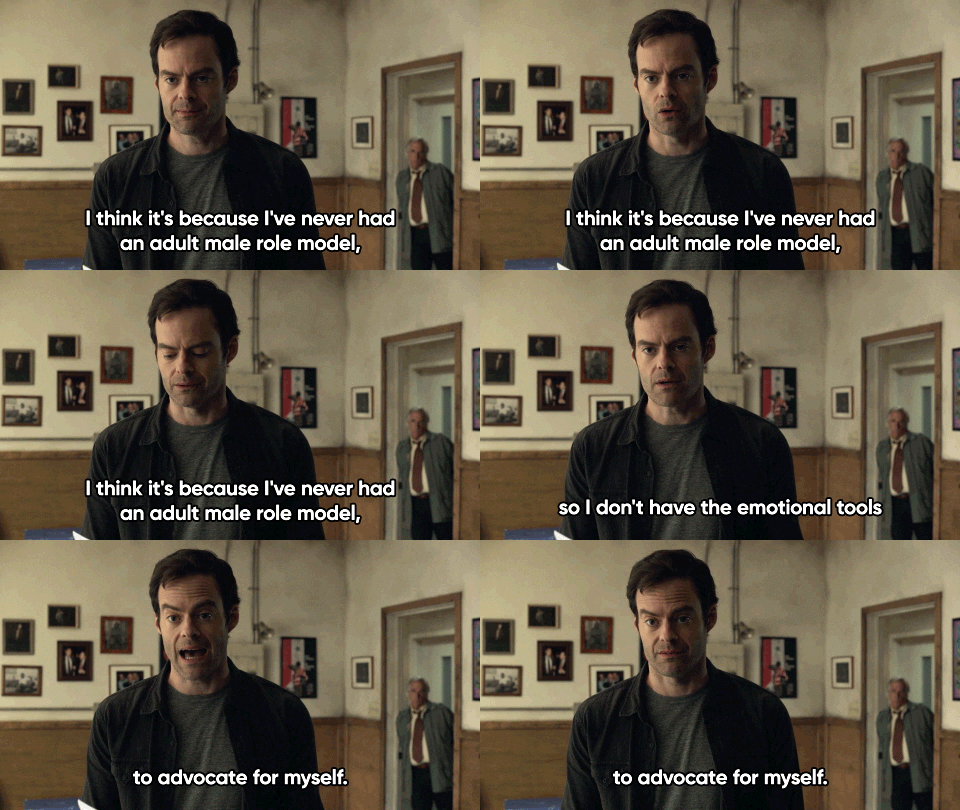
What’s more, they’ll also notice how their mothers tell their twelve-year-old sister to not be a fast girl after a stranger whistles at them on the street. They’ll hear their mother tell their sisters how it’s their fault that their uncle’s friend is leering at them. They’ll hear their mothers tell their sisters how their father doesn’t want them going out at night, ten minutes after their father gave them a new cologne because ladies love the smell of a real man.
So, how does this affect them in the real world?
Failure to launch
Failure to launch basically translates to the difficulties some young adults face when transitioning into the next phase of development—a stage that involves greater independence and responsibility.
So what does this have to do with men? Well think about it – boys are already programmed from an early age to grow up, get into a good university and find a successful job so that they can take care of their family in the best way possible. They’ve also been fed the idea that men are God’s gift to the world and that hasn’t helped things. Basically, you’re now stuck with a group of entitled, spoiled young men who go around thinking the world owes them something, simply because they’re boys. What’s more, a lot of these men finish university (some may even drop out), simply because that’s what they’re supposed to do and with no set goal afterward. What happens if they don’t get the job they’ve been studying for?
If that’s not enough, we now have a growing number of women who are working out of choice and becoming financially independent. These young men were led to believe that a woman would always financially need them thus, all they had to bring to the table was their wallets. Now, with their significant others bringing in more money and having more opportunities than their mothers ever did, they’re stuck. They were taught that the key to a successful, long marriage was to ensure that they always had money. Forget intimacy, trust, compassion, and fidelity… Just keep your wallet stacked and it really will be till death do us part.

Young men are facing an identity crisis. On the one hand, they can’t face the fact that they’ve chosen to study for a specific degree, or they’ve chosen a certain career path simply because society told them they’d be more successful in doing so. If they do admit to it, then they’ll be admitting to their fears and insecurities and that’s the one thing they were told that men don’t do. So they’ll just trudge on, depressed, empty and trying to ignore the fact that the world is waiting with waited breath to see how far they’ll succeed. They may even try to overcompensate their masculinity by making homophobic and misogynistic comments as well as engaging in both alcohol and drug abuse.
Catcalls are not mating calls
There’s also the risk that these men may try to show their dominance and masculinity in other ways, which includes trying their hardest to make the women in their company uncomfortable with derogatory comments. There’s also them making bets with their friends about who can sleep with their new female neighbor first and the risk that they may go over and above to ensure that they win the best (regardless of her consent.)
On the other hand, if they do get that successful job, they’ll soon realize that being male and having a cheque isn’t enough for them to get the woman that they want because she’s going to need you to bring more to the relationship than your bank card. However, they haven’t seen what that looks like.
Then again, they may find a woman who isn’t as financially independent. If they do, there is still that lingering risk of them possibly resorting to financial abuse if they get the inkling that mama is trying to find a way to get her own coin. He also might dab his toe in infidelity because hey, if their parents’ marriage survived, so why wouldn’t his? Also, he can never forget his uncles’ advice about having the highest body count out of all his cousins.
What’s more, throughout this tumultuous journey that a young man faces, his parents will still be paying for their way because they can’t let their son starve and their child knows this.
It’s a vicious cycle that ends with a 50-year-old man still living with his parents or on their dime because they cut the cord too late, and they told him to immediately run instead of giving him a hug and letting him walk.
Listen, if we want to combat toxic masculinity, and by doing so curb the rates of gender-based violence and male suicide, it’s important to help boys change their attitudes and behaviors. This could mean that fathers may need to actually parent and teach their sons that, while they’re great and all, their existence should never come at the detriment of a woman. That they’re allowed to shed a tear now and then. That they literally have no right to a woman’s body, whatsoever. That a marriage cannot survive on the basis of him being the breadwinner and what will people think if we break up. And that boys will not always be boys.
The Men In My Life Respond
I can’t exactly speak on how toxic masculinity affects black men without getting a black man’s response. That said, below is a review that I got from one of my good, male, black friends after he read my post. It’s an interesting take.
My main thought was, yes. This is a prevalent occurrence among us dudes but being a millennial adds in a different aspect to this thing cos we’re in a space where we’ve been raised with by these people with those old ideologies of what makes a functional (black) home. But at the same time, we’re living in a world of newer opportunities for everyone (on paper that is).
So it’s like we’re one foot in the door of changing that traditional ideology but our subconscious fear of ending up like our parents is the very thing that turns us into them. It’s a twisted cycle cos now our identities change from who we are in the world to who we are when we get home to the people we “love”. It’s like we submit our best selves to the cruel world and we turn all that negative shit on the ones we love cos “you have to accept me for who I am.”
As a man… shit is weird. Because you’re looked at as a person who chooses your moments of strength and weakness. Whereas you’re just someone who’s trying to figure it out. As much as we’re the ones who essentially lead the pack, the fundamental element of that leadership is rooted in the will of learning. Especially from women.
Haha, this piece could probably aggravate the common “man”. It did a bit until I got to realize that certain flaws in my character caused me to be on the defensive instead of seeing the beast for what it is. It showed that maybe we use the whole “Because I’m a man” thing as a wall to hide behind instead of a foundation to build our own characters from. Cos those flaws allow for an opportunity to grow us up.
But yeah. It was… engaging and uncomfortable.

 Pastry Playdates
Leave a comment