Forget Where’s Waldo, growing up the most popular game in front of the TV was Spot The Negro. Okay, I’m kidding, not really.
I used to consume teen movies and TV sitcoms like I was drinking water, to the point where I had to remind myself that the Sabrinas, Princess Mias and Katrinas of the world weren’t actually real characters. Well, it was real to me damn it. The fact of the matter is, while fictional, we each learned how to be a proper teenager through these movies and even tried to use their lives to try and navigate through our awkward and messy teenage years.
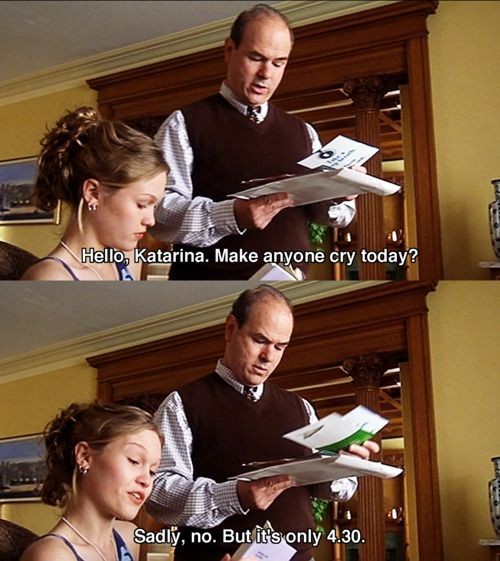
However, as much as I related to Mia’s awkwardness and Kat’s sarcastic, feminist nature, there was always that nagging sensation that I couldn’t relate to her as much as I truly wanted to. A lot of the time, I often felt invisible when watching the screen. A lot of the films and TV shows growing up had stories that revolved around white girls and while I could relate to them on some levels, black women who looked like me and shared my experiences didn’t feature very much in those storylines.
Token: Proof Your Favourite 00s Movie Isn’t Racist
If the producers of a film want to emphasize diversity, they’ll use a token. Basically, a character that’s often relegated to the protagonist’s best friend whose characteristics encompass every stereotype known to man and as such, the white audience will feel a little less threatened by them.
That said, while it’s nice to see someone who looks like you on screen, there’s more to black women than the sassy, loud best friend who for some bizarre reason, always has to talk and roll her neck around at the same time. The worst part is, these characters carry the responsibility of representation. As such, when white people meet you, they will automatically assume that you’re obsessed with three things – fried chicken, your weave and hip hop.
So, how do you know if your favorite movie or TV show is simply using your favorite black character as a token? Well, they may be a token if they:
- Die first (or barely make it to the end): LL Cool J (Halloween) and Ice Cube (Anaconda) are heroes.
- Have no story of their own: They’re there to provide emotional support or comic relief. Bizarrely, they seemingly don’t have other friends, family members, or a life outside the world of the white characters.
- Are a stereotype.
- Do not acknowledge their race: I’m sorry but every black person in their life has been in a situation where race has come up so how does this not happen in movies?
- Are in need of a white savior: The Help which is a movie, set in Jackson, Mississippi 1963 during the Jim Crow-era about the trials of black maids. Yet, somehow, the movie, and book, hardly focus on their efforts but rather on the white protagonist Skeeter Phelan (Emma Stone). She’s a nice girl but, as said by one of the characters in the book, “black people didn’t need white people to tell their stories.”
A token above the rest
Now while it’s hard to admit that some of your favorite black characters growing up were solely there to a. make the film/series look less racist, and b. Be a supporting to the supporting cast, it’s not all bad. In fact, there are a few characters that were regulated to tokenism and yet, they stood out and captured my heart. Here are a few of my favorites.
1. Dionne Davenport- Clueless (1995)
Named after one of the greatest musicians of all time, Stacey Dash’s character on Clueless is a pop culture icon.
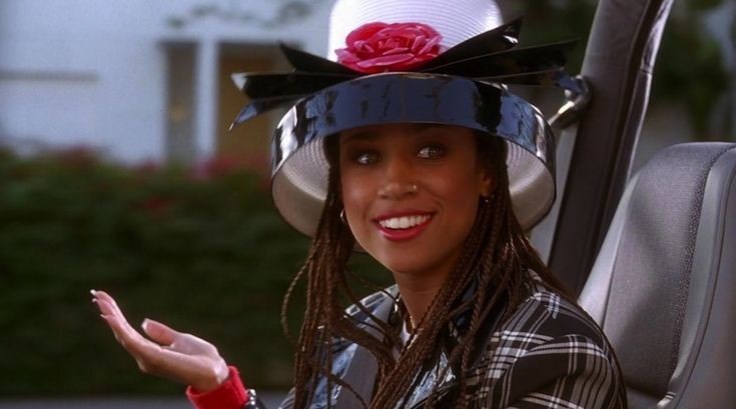
Yes, she was Cher Horowitz’s best friend but there was more to her than that. She wasn’t only this black beauty but she was also smart, spirited, and strong-willed and she had an amazing fashion sense (we don’t talk about the hat). The best part is, on the TV show based on the film, she had a whole life and character arc outside of Cher, and she provided a glimpse into the black teen experience.
2. Jal Fazer- Skins (2007-2013)
Aside from the fact that she’s a musical genius, I loved Jal’s frustrations with her brother’s wannabe rap personas.
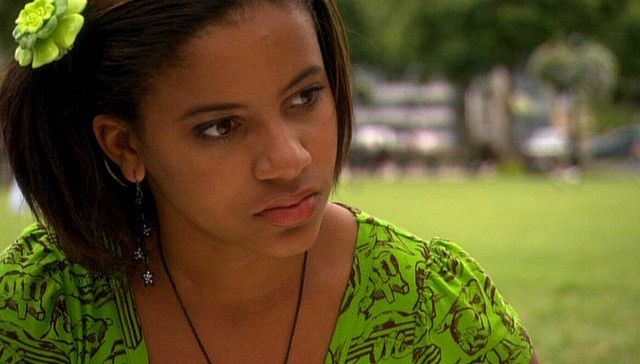
Yes, she was the token black but one of the reasons as to why Skins was such an amazing show was because it delved into each character and when it did, I related with Jal on some many levels and like everyone else, I fell in love with her passion, drive and the fact that she could call out her dad so effortlessly. My admiration only grew when she took control of her body and made a choice for herself that, while some people may frown upon, was ultimately best for her.
3. Rochelle – The Craft (1996)
Who doesn’t love a movie about witches, and honestly Rochelle really was Black Girl Magic. It wasn’t just the fact that she got back at a racist bully by making her hair fall out. For someone who grew up watching Sabrina and Charmed, it never felt so good to see someone who not only looked like me but also fucked with magic.
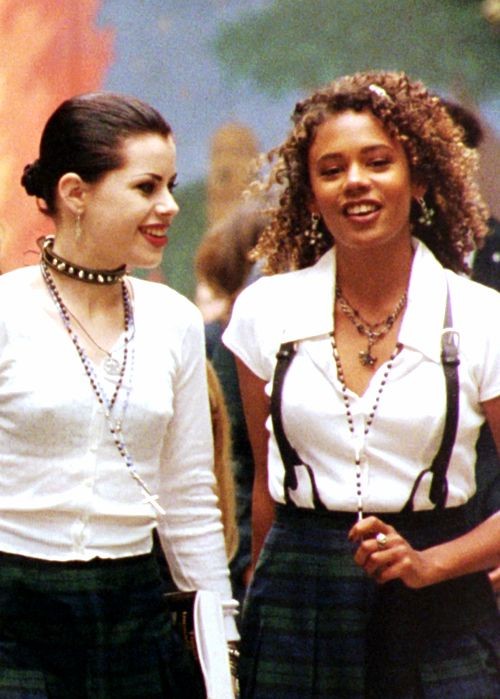
While I may not agree with the way she used her powers in the end, I will forever love Rochelle for showing us that black women are human, we have our flaws, but despite it all – we are magical.
4. Miranda Killgallen– As Told By Ginger (2000-2006)
Yes, it’s a cartoon but honestly, Miranda was that bitch, and I’m pretty sure she was a sociopath but she did have some redeeming qualities.
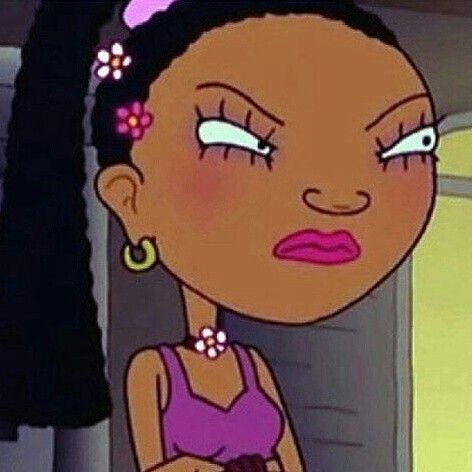
Aside from her maniacal laugh and the fact that she was mean to Ginger, Miranda was also a fiercely loyal friend to Courtney, she was a good girlfriend to Darren and she’s actually quite kind. You just have to dig really, really deep to find it.
5. The East Compton Clovers – Bring It On (2000)
I mean, need I say more?
The cheerleading movie Bring It On remains a timeless classic that should be shown in cinemas until the end of time. I mean aside from the ridiculously cute uniforms, the film also tackled cultural appropriation before Kim Kardashian discovered yaki.
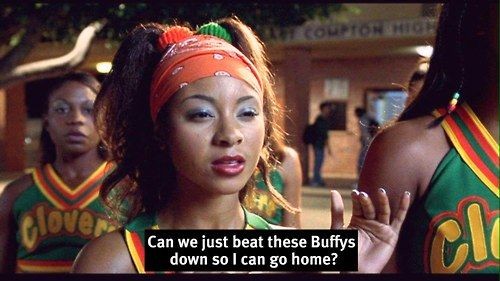
Led by determined and fierce head cheerleader Isis, played by Gabrielle Union, the East Compton Clovers weren’t ridiculously caricatured in a white cheerleading movie but instead were portrayed as smart, talented, and hardworking athletes.
One of my favorite scenes in the film is when the Clovers are trying to figure out how to finance their way into the Nationals competition. The film’s pasty protagonist, played by Kirsten Dunst shows up with a huge check to help pay for the Clovers’ entry-fee to Nationals and Isis tears up the check before telling Dunst’s character to bring her best game to the competition.
We stan.

Not only do the Clovers manage to get sponsorship on their own to get to Nationals, but they win the entire competition. With that scene, Isis proved that a black girl can do something so strong and independent, and still come out winning.
The last token standing
Growing up is hard enough as it is, and having to grapple with the possibility that, as a black girl, you aren’t leading lady material isn’t the greatest thing in the world. This is why, despite the whitewashing of teen flicks such as The Fault in Our Stars, The Hunger Games, Divergent, as well as that time the black girl in Harry Potter magically turned white when she got a speaking role and became Ron’s love interest, I’m so happy for shows such as Insecure, Dear White People, Grownish, Black Lightning and The Chi.
The characters on the show aren’t subjected to the role of a background player but are instead reminding both you and me that we are destined for the starring role.
 Pastry Playdates
Great article, thanks for highlighting the awesomeness that lives within black folk.
We are indeed vibrant and important beings on this planet we deserve to have our stories told in the same manner as that of our white counterparts.
Tv certainly played a large part of my childhood! Growing up with an entire team of siblings, watching tv shows and movies formed a huge part of our childhood for sure. I remember waiting rather impatiently, at the start of each week, for Friday to roll up, so that we could get our weekly fix of which ever movie was playing that evening, on SABC1 to be specific. Walking up to the video town not far from our house, to hire out our next two block busters for the evening became our weekend tradition.
Needless to say, we watched a countless number of movies and tv shows back in our day. Yet, somehow, the very evident theme of emphasising, the all white American life to be the status quo while grossly minimizing the importance of
black American lives and their stories had missed me completely! A dialect we’ve been trained to accept by default.
I must admit, I didn’t have the complex of feeling unrelatable to white tv characters because, while I was watching tv shows like Sabrina the Teenage Witch, Being Eve, and cartoons like Pepper Anne, Brace Face and Kim Possible on the other hand, I was also watching cartoons and tv
shows like, The proud family , One on One, Half & Half, Taina & That’s so Raven. At some points we even threw in some Dragonball Z, Medabots, & Pokemon so we got some Asain influence in as well. As far as movies, I went from watching white dominated films like ‘Clueless & Legally Blond’ to watching black dominated films like Soul Food, Exit Wounds, Like Mike, You Got Served… In essence we watched t.v. shows & movies which had a decent amount of coverage and representations of strong black characters on tv. So that complex could have possibly missed me in that regard, as I wasn’t only watching shows dominated by white characters.
It would have been great though, to have seen more black and white characters acting in the same movie yet given equal importance, which the article points by referencing Dionne Davernport in Clueless.
The complex expressed in this article I have felt at several stages in my life, growing up in a predominantly white neighborhood and going to model C white schools, having white friends, I one hundred percent felt like ‘a token black girl’ and at times found myself involuntarily playing side kick to my white friends.
An unfair but necessary solution for people of colour to curb this complex, would entail making more conscious efforts to expose ourselves to different sociocultural experiences.
LikeLike