
Picture the scene – you’re walking through your favourite wellness store, basket on-hand shopping for some must-have essentials for Summer, and you get to the sunscreen aisle. You’re probably staring at several shelves dedicated to the different types of sunscreen.
There’s sun protection for your face, your body, and your kids; there’s tinted sunscreen and makeup with SPF; there are sprays, creams, and oils. The options are practically endless, with countless distinctions among them, but perhaps the most prominent decision-making factor is mineral versus chemical sunscreen.
The Mineral Makeover
“Protecting your skin against sun damage is crucial year-round, whether you’re beach-bound or couch serving, the best sunscreen is one you will use again and again,” explained Natasha Davel from Fundamentals Skincare – a South African vegan, fragrance-free, and cruelty-free skincare brand.
“You want to ensure your sunscreen is broad-spectrum, water-resistant, and has an SPF of 30 or higher, protecting you against UVA and UVB damage.”
With this in mind — mineral sunscreens have gained the eyes of many in recent years, with devotees opting against chemical UV blockers for a variety of reasons.
“The beauty of a mineral sunscreen is that it usually contains zinc oxide, which is one of the most effective blockers of both UVA and UVB rays, which means that it provides the “broad spectrum” protection you’re after. Mineral UV filters also don’t break down in sunlight as some chemical UV-filters do,” added Davel.
How do I identify the two?
The distinctive difference between a mineral (also known as physical) and chemical sunscreen is in the type of filter used and its role.
Mineral sunscreens solely rely on either zinc oxide or titanium dioxide (or both) as physical blockers that reflect UV rays from your skin.
Who should use mineral sunscreen?
“People with sensitive or acne-prone skin normally opt for mineral sunscreens. The heat that’s generated as a chemical sunscreen deactivates UV rays and can trigger irritation for people with sensitive skin.”
So, says Davel, mineral sunscreens are less likely to cause allergic reactions or skin irritation, although this can vary from person to person.
If you suffer from skin conditions like dermatitis, eczema, acne, or hyperpigmentation, the latter of which is particularly common in people with darker skin, it’s a good idea to choose a mineral sunscreen. Read the label for words like “non-comedogenic,” “oil-free” or “won’t clog pores”.
“There’s a misconception that browner or darker skin tones don’t need to use sunscreen because ‘we have melanin’ or ‘we don’t burn from sun exposure’. Yet, the opposite is true. Darker skin tones have a higher risk of developing hyperpigmentation, which is exacerbated by sun exposure,” added Davel.
How do I use a mineral sunscreen?
Mineral sunscreens are used the same way any other sunscreen would be used. Dermatologists recommend applying your sunscreen 15 to 20 minutes before going out into the sun and reapplying during the day if you can.
“Apply sunscreen every day, regardless of the weather. Even if it’s cloudy outside, up to 80% of the sun’s harmful UV radiation can still reach your skin. Choose a mineral sunscreen that contains natural ingredients. And remember, sunscreen is only one part of effective sun protection.”
Davel adds that in conjunction with wearing sunscreen, make sure you’re wearing protective clothing such as lightweight and long-sleeve shirts, pants, a wide-brimmed hat, and sunglasses with UV protection. You should also seek shade when the sun’s rays are strongest between 10 a.m. and 2 p.m.
What’s new in mineral sunscreens?
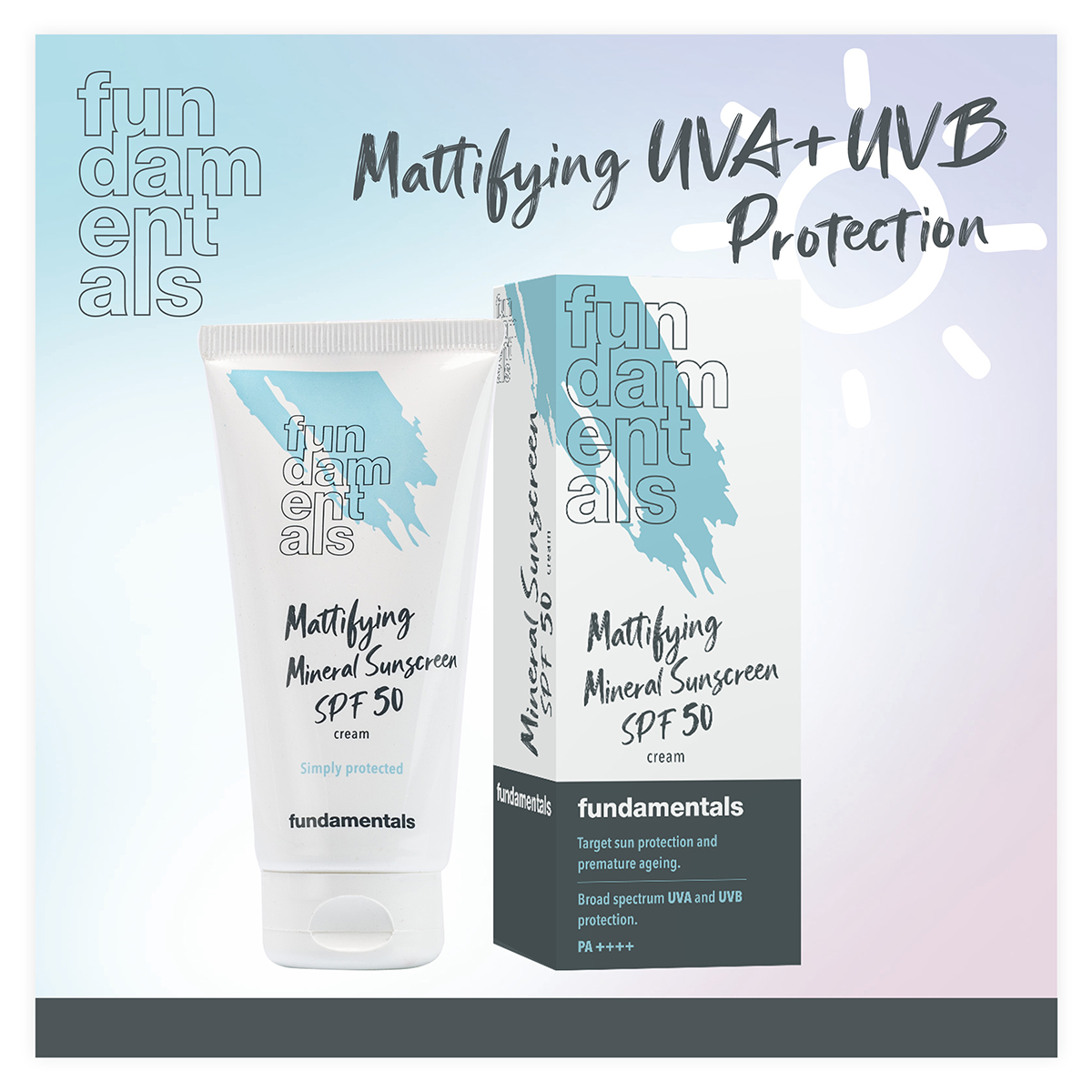
Fundamentals Skincare has just launched its brand new Mineral Sunscreen that is mattifying, and most suitable for oily to combination skin types. This new sunscreen’s hero ingredient is Kalahari melon oil. This ingredient is a nourishing and hydrating oil, concentrated for skin cell recovery and moisture balance.
It boasts of a potent combination of linoleic acid and vitamin E, which provides your skin barrier with the nutrients it needs for growth and repair at the cellular level. This powerful sun protectant also shields your skin against harmful UVA and UVB Rays, is Pa ++++, provides a mattifying effect for oilier skin types, leaves no white cast, anti-aging.
 Pastry Playdates